A mehndi ceremony is the pre-wedding celebration where the bride's hands and feet are decorated with henna, called mehndi in India and Pakistan. It is usually held one or two nights before the wedding, hosted by the bride's family, and it is a relaxed evening of henna, food, music, dancing and family performances.
You will see it spelled mehndi, mehendi or mehandi. They all mean the same event. Some families call it the mehndi night or the henna night, and many hold it on its own evening, while others fold it into the sangeet.
If this is the first mehndi in your family, or you are half of a fusion couple and your side has never been to one, this guide covers what happens, who comes, how the evening usually runs and what the music does from start to finish. It also covers the questions to settle early, especially if the mehndi is at home.
What does mehndi mean?
Mehndi is the word for henna in Hindi, Urdu and Punjabi. Henna is a paste made from the crushed leaves of the henna plant, and it leaves a reddish brown stain on the skin. Henna nights before a wedding are part of many cultures, from South Asia to the Middle East and North Africa, as this overview of the henna ceremony tradition explains.
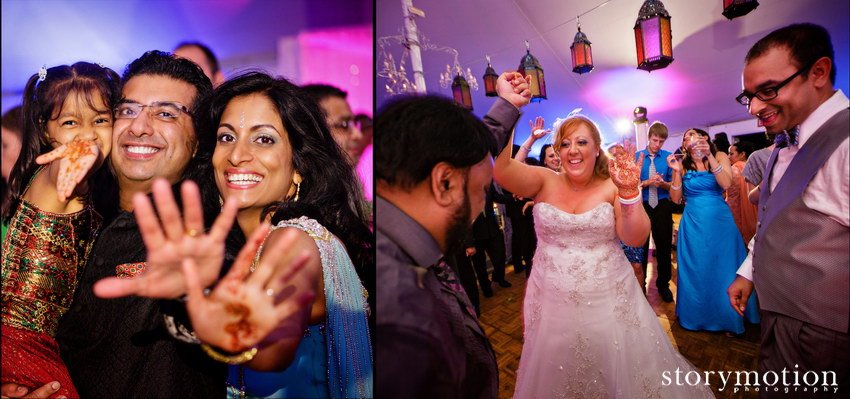
At an Indian, Pakistani or Bangladeshi wedding, the mehndi is about blessing the bride and spending time together before the big day. A henna artist draws detailed designs on her hands and feet, often hiding the groom's name or initials in the pattern. Many families say that the darker the stain, the stronger the love, and guests enjoy watching the groom try to find his name later.
What happens at a mehndi ceremony?
Every family does it a little differently, but most mehndi nights follow the same basic flow:
- The bride's henna. The artist usually starts on the bride before most guests arrive, because detailed bridal designs take hours. She sits in a comfortable, well lit spot where family can keep her company.
- Guests arrive. Food and drinks come out, and family members take turns sitting with the bride. Henna artists often do small designs for guests too.
- Blessings and rituals. Depending on the family, elders may give blessings, apply a little henna to the bride's palm, or bring gifts. Some families sing traditional songs together, sometimes with a dholki, a small hand drum.
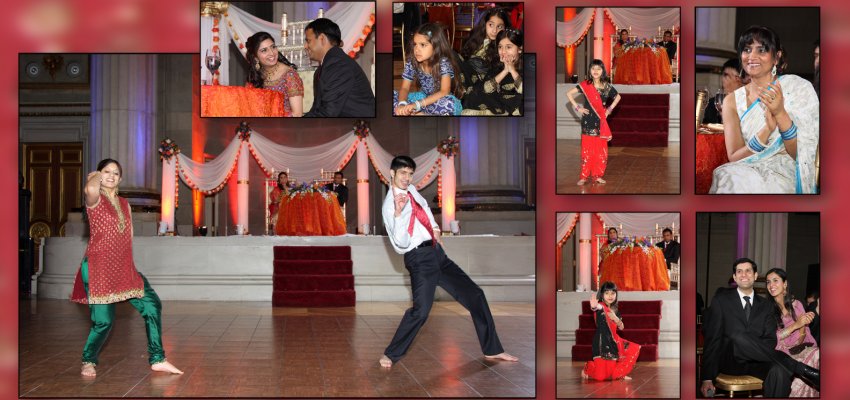
- Entrances and performances. Many couples now make a grand entrance, and cousins and friends perform rehearsed dances, often one group from each side.
- Open dancing. Once the formal moments are done, the floor opens and the evening turns into a party.
The bride's henna has to dry, so she often stays seated for a large part of the night. Plan the evening so the fun comes to her: performances in her line of sight, family visiting her seat, and the open dancing saved for when her henna is ready.
Who attends a mehndi ceremony?
Traditionally the mehndi was a smaller gathering for the bride and the women of her family and close friends. Today many mehndi nights are mixed events with both families, and the groom often joins for at least part of the night. In some families he has his own smaller mehndi with his side.
The guest list is usually smaller and more casual than the wedding. That is part of the charm: it is where cousins finally catch up, aunties share stories and new in-laws get to know each other before the formal events start.
Mehndi vs sangeet: what is the difference?
The two are easy to mix up because many couples combine them. Here is the simple version:
- The mehndi is centered on henna for the bride. It is relaxed, colorful and often more intimate.
- The sangeet is centered on music and performances. It is usually a bigger evening event with choreographed dances, speeches and a full dance party. Our guide What Is a Sangeet? explains how one runs.
If you combine them, the henna usually happens earlier in the day or at the start of the evening, and the performances and dancing take over once the bride's henna is set. That keeps the stage free for the bride when it matters most.
A sample mehndi night timeline
Every family's evening is different, and your planner, henna artist and venue will shape the real times. As a starting point, an evening mehndi could look like this:
| Time | What happens | Music and sound |
|---|---|---|
| Afternoon | The henna artist starts on the bride | Soft background music, or none, as the bride prefers |
| 6:00 pm | Guests arrive, food and drinks are served | Familiar Bollywood and folk songs at conversation volume |
| 7:00 pm | Blessings, rituals and family songs | Microphones for elders, a dholki or live singer if you have one |
| 7:45 pm | Couple's entrance and family performances | Each performance's track cued, an MC introducing each group |
| 8:30 pm | Open dancing | Bhangra, Bollywood and Punjabi hits, plus the songs your American guests know |
| 10:00 pm | Last songs and send-off | A favorite group song to close the night |
The point of a timeline is not to rush anyone. It is to make sure the moments you care about happen while everyone is still there, and that the bride is not left sitting with wet henna while the party peaks across the room.
What music is played at a mehndi?
Mehndi music usually moves through three moods:
- While guests arrive: warm, familiar songs at a volume that lets people talk. This is where old Bollywood favorites and folk songs shine.
- During rituals and performances: traditional mehndi songs, family sing-alongs, and the tracks for each performance, cued exactly when each group is ready.
- When the floor opens: high-energy bhangra, Bollywood and Punjabi music, mixed with hip hop and Top 40 if your guests come from different backgrounds.
A good DJ reads the room through all three. At Planet DJ Productions, we plan this with you before the event: a custom playlist, a do-not-play list, and the order of entrances and performances, all in our online planning system. Our MCs introduce each performance and keep the evening on schedule, so your family can enjoy the night instead of watching the clock.
Live music, dhol and choreography
A dhol player brings instant energy, especially for an entrance or the first song of open dancing. Some families also like live singers or musicians for the traditional songs, which makes the blessings feel personal. Our live musicians include dhol, tabla, sitar, bansuri and shenai players, and singers who perform traditional Indian music as well as American songs.
Family performances are often the highlight of the night, and they are what guests film and share. If your cousins want to look sharp on the floor, choreography helps them learn a routine in time, whether it is for the mehndi, the sangeet or the reception.
Planning a mehndi at home or at a venue
Many mehndi nights happen at home, in a backyard tent or in a community hall. That makes the evening feel personal, but it brings questions a hotel ballroom answers for you:
- Power. Sound, lighting and catering all need power. For a tent or an outdoor space, ask early whether you need a generator.
- Sound level. At home, think about neighbors and any local noise rules, and agree on an end time for loud music.
- Space. Plan a comfortable spot for the bride where she can see the performances, a clear area for dancing, and room for the henna artists to work.
- Light. Henna artists need good light to work, and the evening needs warm, colorful light to feel like a party. Uplighting and simple color washes change a backyard or hall quickly. Our lighting team designs looks that match your colors.
- Weather. For anything outdoors, have a covered backup.
One couple, Jasmine Sethi & Angad Singh, held their Mehndhi, Sangeet and Ceremony at a residence in Potomac. They told us:
"Planet DJ Productions provided me with DJ, lighting, generator rental, party favors, and a dhol player. It was my one stop for a bunch of services which was great!"
Jasmine Sethi & Angad Singh
Fitting the mehndi into your wedding week
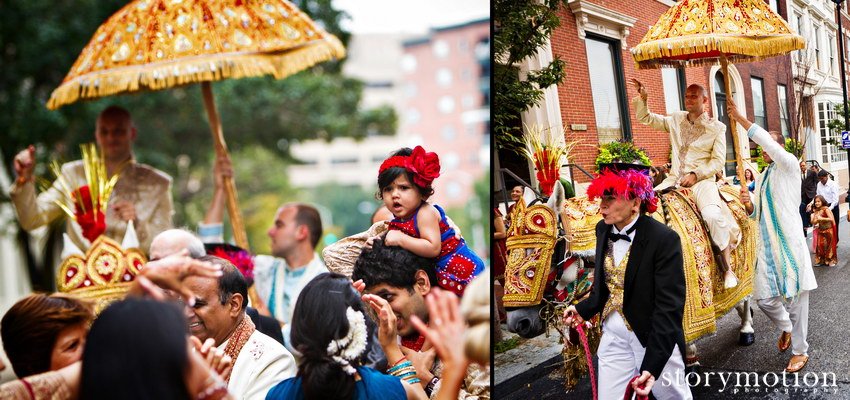
An Indian wedding is not one event. It is often a mehndi, a sangeet, a baraat, a ceremony and a reception, sometimes across several days. Many families give each event its own look and its own mood, so the mehndi feels colorful and casual and the reception feels formal. Our Indian weddings page shows how we cover every event with one team, from the mehndi to the groom's procession and the reception.
Working with one team across all your events also means the people running your mehndi already know your family, your music and your timeline on the wedding day. As one couple put it:
"I didn’t have to worry about a thing & during our Mehndi event Ateet made sure everything got started in a timely manner."
Nadia Church and Mark Armentrout
A quick mehndi planning checklist
- Choose the date, usually one or two days before the wedding, and decide whether it stands alone or joins the sangeet.
- Book your henna artist early and ask how long the bride's design will take.
- Decide who is invited: the bride's side only, both families, or everyone.
- Pick the setting, and if it is at home or outdoors, confirm power, sound limits and a weather plan.
- Plan entrances and performances, and send the music for each one to your DJ ahead of time.
- Share a simple timeline with your family so everyone knows when the performances start.
Planning a mehndi in Virginia, Maryland or DC? Check your date with us or call 877-737-3262. We are happy to talk through your events and your music.
Frequently asked questions
What should you wear to a mehndi ceremony?
Bright, festive clothes are the norm. Many guests wear Indian or Pakistani outfits such as a lehenga, salwar kameez, kurta or sari, often in yellow, green, orange or pink. If you are getting henna, choose short or loose sleeves so the paste is not smudged while it dries, and wear shoes you can dance in.
How long does a mehndi ceremony last?
Most mehndi celebrations run for an evening, but the bride's henna can take hours on its own, so her part often starts well before guests arrive. Ask your henna artist how long the bridal design needs, then plan the rest of the night around it with your planner and venue.
Does the groom have a mehndi?
Often, yes. In some families the groom gets a small design on his palm, sometimes just a dot or a simple pattern, either at the bride's mehndi or at a smaller gathering with his own family. Many modern couples celebrate one shared mehndi night so both families can meet before the wedding.
Is a mehndi ceremony religious?
The mehndi is more of a cultural tradition than a religious rite. Families who are Hindu, Muslim, Sikh and Christian all hold mehndi nights, and each adds its own blessings or customs. That is why the evening can look quite different from one family to the next.
Can you combine the mehndi and the sangeet?
Yes, and many couples do to save a night and a venue. The usual approach is to start with henna and family time, then move into performances and dancing once the bride's henna has set. Give the evening a clear running order so the henna, the performances and the party each get their moment.